
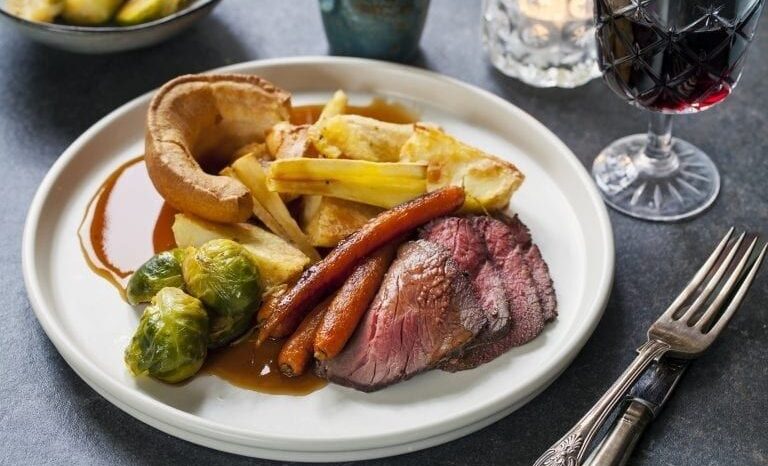
Anatomy of an Authentic British Sunday Roast: Craft, Chemistry, and West Country Comfort
The Ritual of the Sunday Table in Bath and Beyond
On a crisp Sunday afternoon in Bath, the streets may carry the clean chill of the Avon valley while an open hearth lends a softer warmth indoors. Beyond the doorway of a heritage inn, the scent is unmistakable: beef fat meeting hot metal, onions darkening in a roasting tin, herbs releasing their oils, and potatoes developing a brittle golden shell. A well-made roast announces itself before the first plate arrives, with the gentle clatter of cutlery and the reassuring promise of gravy being passed from hand to hand.
The Sunday roast is more than a meal assembled around a joint of meat. It is a social ritual, shaped by the British habit of gathering after church, a country walk, or a leisurely morning at home. Its familiar elements have changed with household budgets, seasonal availability, and regional taste, yet the architecture remains remarkably constant. For a useful account of its cultural place, the historical roots of the Sunday roast reveal how a practical family dinner became one of Britain”s most recognisable communal meals. Today, its craft rests on two connected pillars: careful control of heat and a respect for the West Country”s farms, pasture, orchards, and traditional foodways.

Pasture and Terroir across West Country Cuts
In the West Country, provenance is not a decorative detail on a menu. It is part of the flavour story. Devon, Somerset, and neighbouring counties offer a landscape of generous rainfall, rolling pasture, hedgerows, limestone and rich river valleys. Soil composition influences the grasses available to grazing animals; rainfall determines the softness and productivity of pasture; water and husbandry affect the pace at which livestock mature. Such factors do not create a single, uniform taste, but they help explain why meat from a well-managed local farm can possess a character distinct from meat produced through intensive finishing elsewhere.
The French idea of terroir provides a useful culinary framework. As the Library of Congress guide to regional cuisine explains, food reflects not only soil and climate but also inherited techniques and human production practices. That principle applies neatly to West Country roasting. Traditional Devon beef, particularly from well-finished cattle, is valued for a rounded flavour and useful marbling, while West Country lamb is generally prized for its tenderness and mild, grassy character. Regional identity depends as much on breed selection, grazing, slaughter, hanging, and butchery as on the field itself.
| Ingredient | What shapes its character | Best roasting consideration |
|---|---|---|
| Devon beef | Pasture, breed, marbling, hanging time | Begin with a hot oven for browning, then finish gently according to the cut |
| West Country lamb | Grass feeding, age, breed, and careful maturation | Protect lean meat from drying while allowing exterior fat to render |
| Root vegetables | Season, soil, storage, and sugar development | Use enough space in the tray to encourage roasting rather than steaming |
Dry-aging concentrates flavour by allowing moisture to evaporate while natural enzymes gradually soften the meat”s structure. It does not make every cut tender by magic, and it must be carried out under controlled conditions, but the result can be especially rewarding with beef intended for a grand Sunday table. Heat then completes the work. Slow roasting gives collagen time to convert into gelatin, producing succulent texture in suitable cuts, while a final period of high heat develops the savoury crust. Leaner cuts require restraint, accurate temperature control, and a proper rest so that their juices redistribute rather than spill across the carving board.
The Chemistry of the Perfect Roast Potato
The roast potato is often treated as a supporting actor, yet it supplies one of the meal”s clearest tests of technique. Varieties such as Maris Piper and King Edward contain the high proportion of starch needed for a floury interior. Their cells break down readily during cooking, creating a soft centre that contrasts with a deeply browned exterior. Waxy potatoes can remain neat and creamy, but they do not generally produce the same craggy, brittle shell.
Parboiling is the essential bridge between raw potato and proper roast potato. It partially cooks the centre and gelatinises surface starch. Once drained, the potatoes should be allowed to steam dry, then shaken or scuffed in the pan. This roughens the edges and increases the available surface area, giving fat more contact points and creating irregular ridges where browning can take place. The process is simple, but timing matters. Potatoes that are undercooked remain dense; those boiled too far may collapse into fragments before they reach the roasting tin.
- Choose floury potatoes, cut them into generous, similarly sized pieces, and parboil them until the outside yields while the centre still holds its shape.
- Drain thoroughly, leave them to release surface steam, then shake the pan firmly enough to create a thin layer of starchy, roughened edges.
- Heat beef tallow, duck fat, or another suitable roasting fat until properly hot before adding the potatoes, then turn them so every surface is coated.
- Roast without crowding, turning only when the underside has formed a firm crust, and season near the end if a particularly crisp finish is desired.
Fat is both a cooking medium and a carrier of flavour. Beef tallow brings savoury depth that suits a rib or sirloin roast, while duck fat gives a rich, rounded character and excellent heat transfer. The audible crunch comes from dehydration and browning at the surface, where sugars and amino compounds react through the Maillard process. That sound matters because it signals contrast: the shell should fracture cleanly, while the interior remains light, steaming, and almost buttery. A crowded tray lowers the temperature and traps moisture, so a generous roasting tin is a small but important investment in texture.
Aerodynamics and Steam in the Yorkshire Pudding Batter
Yorkshire pudding began as an economical use of the roasting tin. Early cooks placed a batter of flour, eggs, and milk beneath or alongside the meat so it could absorb dripping and benefit from the heat of the fire. A 1737 recipe referred to the dish as “Dripping Pudding”, while Hannah Glasse”s 1747 cookbook helped establish the name Yorkshire Pudding. It could be served before the meat, especially when stretching a smaller quantity of beef, and historical versions were not confined to a single course. The modern high-walled pudding is therefore both a practical survivor and a carefully engineered piece of culinary architecture.
Its rise depends on the relationship between batter, fat, and sudden heat. Eggs provide proteins that set as the mixture cooks; flour supplies structure; liquid becomes steam. When batter meets smoking-hot beef fat, the base begins cooking immediately. A fiercely heated oven then expands the steam and lifts the batter, while the setting proteins and starches hold the inflated shape. If the fat is merely warm, the pudding absorbs it without gaining the rapid expansion needed for height. If the oven is opened too early, the fragile structure may lose pressure before the walls have set.
Resting the batter is equally important. A period in the refrigerator or at room temperature allows flour to hydrate and relaxes some of the gluten tension created during mixing. The resulting batter pours more smoothly and tends to bake into an interior that is airy rather than rubbery. A useful working sequence is:
- Whisk flour, eggs, milk, a little water, and salt until smooth, taking care not to incorporate excessive foam.
- Rest the batter so the flour fully hydrates and the gluten network becomes less aggressive.
- Heat dripping in the moulds until almost smoking, then pour swiftly and return the tray to the oven.
- Bake at a high temperature, commonly around 220°C, until risen, golden, and crisp, resisting the temptation to inspect the puddings too soon.
Uniform portions help the puddings cook evenly, but a little variation is part of their charm. The ideal result has a crisp, browned rim and a hollow, tender centre capable of holding gravy. Whether served beside beef in a Bath dining room or produced in a domestic kitchen, the pudding rewards confidence: hot fat, a rested batter, and an oven door left firmly shut during the crucial first stage.
Pan Juices, Reductions, and the Art of True Gravy
Gravy begins in the roasting tin, where browned meat juices, rendered fat, caramelised vegetables, and dark fragments of fond collect beneath the joint. Once the meat has been removed to rest, excess fat can be poured away while leaving the concentrated savoury residue behind. Deglazing with a modest amount of liquid loosens those browned particles. A wooden spoon is useful here, scraping the base without damaging the tin and ensuring that the most flavourful material enters the sauce rather than remaining baked onto the metal.
A deep bone stock gives gravy body, while Somerset cider contributes fruit, acidity, and a gentle sweetness. A robust ale offers roasted malt and bitterness, particularly well suited to beef. The liquid should be added gradually, then simmered until the flavour becomes concentrated and the texture coats the back of a spoon, a consistency known in classical kitchens as nappe. A little flour or beurre manié may provide structure, but prolonged reduction, gelatin-rich stock, and careful skimming should do most of the work. The finished gravy ought to be glossy and pourable, not stodgy, with enough acidity to keep the richness of meat, potatoes, and pudding in balance.
- Deglaze while the roasting tin is still warm, using cider, ale, wine, or stock according to the character of the meal.
- Scrape the fond thoroughly, but strain the liquid if a particularly polished finish is wanted.
- Add rich stock and reduce patiently, tasting as the concentration increases.
- Finish with a small knob of butter or a spoonful of roasting juices, then correct seasoning immediately before serving.
The best gravy remains connected to the plate. It should echo the crust of the beef, soften the edges of the potatoes, fill the hollows of the Yorkshire pudding, and bring freshness to winter vegetables. A few drops of cider vinegar or lemon juice can sharpen a sauce that has become heavy, while fresh herbs may provide lift without disguising the depth created in the tin.
Gather Around the Quintessential Somerset Feast
A convincing West Country Sunday roast is built from honest ingredients, but honesty alone does not guarantee excellence. The transformation comes through precision: choosing meat with a clear provenance, respecting the grain and collagen of the cut, heating fat properly, roughening potato edges, resting batter, and reducing gravy until it carries both concentration and balance. Each technique serves the same purpose, which is to create contrast between crisp and tender, rich and bright, deeply savoury and gently sweet.
The meal also asks for a leisurely tempo. Allow the joint to rest, finish the gravy while the table settles, and serve the potatoes and puddings at their peak rather than rushing every component into the room at once. Around a well-prepared Somerset table, the pleasure lies not only in the food but in the generous rhythm of hospitality: warm plates, good conversation, a bottle chosen with care, and enough gravy for a second helping. That is the enduring craft of the Sunday roast, where West Country landscape and kitchen chemistry meet in a feast made for sharing.